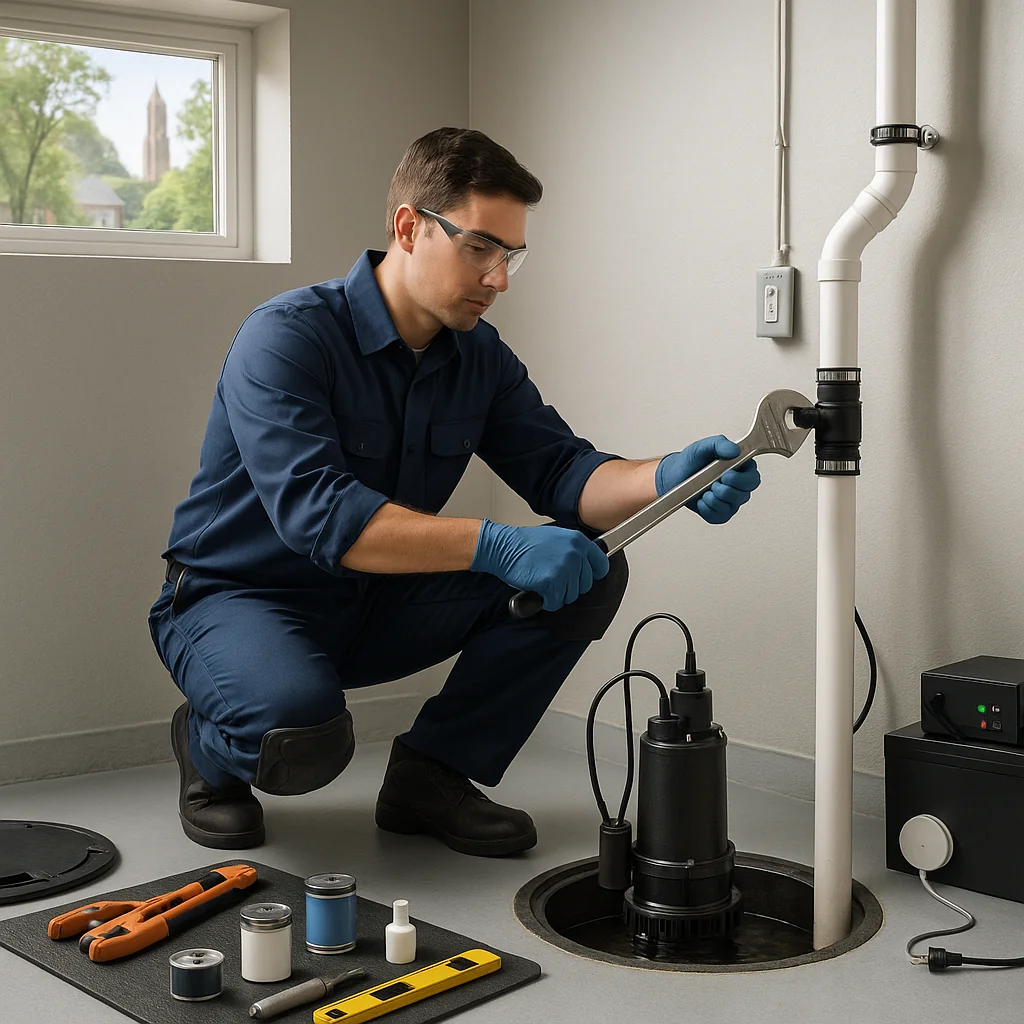
Installing a sump pump professionally in Naperville is essential for protecting your home from the area’s frequent heavy rains and spring thaws that cause basement flooding. As experts at Naperville Sump Pump Pros, we recommend hiring certified technicians for precise placement, electrical compliance with local codes, and integration with your home’s drainage system, ensuring reliable operation and long-term flood prevention tailored to Naperville’s clay-heavy soils and high water table.
Why Professional Sump Pump Installation Matters in Naperville
Naperville, IL, experiences significant water challenges due to its location in the DuPage County floodplain areas. With over 40 inches of annual rainfall and proximity to the DuPage River, basements are prone to hydrostatic pressure buildup. A properly installed sump pump acts as the first line of defense, automatically ejecting water from the sump pit before it floods your living spaces.
DIY attempts often fail due to improper pit sizing, inadequate discharge line routing, or failure to account for Illinois building codes requiring GFCI outlets and backflow prevention. Professional installation by Naperville Sump Pump Pros guarantees compliance, optimal performance, and warranties, saving homeowners thousands in water damage repairs.
Local insight: In Naperville neighborhoods like White Eagle and Springwood, elevated groundwater levels demand battery backups and dual pumps for uninterrupted protection during power outages common in Midwest storms.
Types of Sump Pumps: Choosing the Best for Your Naperville Home
There are two primary types: submersible and pedestal sump pumps. Each suits different needs based on your basement layout and water volume.
| Type | Pros | Cons | Best For |
|---|---|---|---|
| Submersible | Quiet, efficient, fully submerged for cooling | Higher upfront cost, harder to service | High-water volume homes |
| Pedestal | Easier access for repairs, lower cost | Noisier, visible motor | Shallow pits, budget-conscious |
For detailed repairs on these, consider our submersible sump pump repair or pedestal sump pump services. In Naperville’s variable climate, submersible models excel in handling sediment-laden water from recent developments.
Essential Tools and Materials for Installation
Before starting, gather these professional-grade items:
- 4-6 inch PVC discharge pipe and fittings
- Check valve to prevent backflow
- Concrete mix for pit sealing
- GFCI-protected outlet or dedicated circuit
- Sump pit liner (18-24 inches diameter)
- Water-activated alarm
- Torque wrench, level, and hole saw
Always use corrosion-resistant materials suited for Naperville’s mineral-rich water, which can degrade standard components over time.
Step-by-Step Guide to Professional Sump Pump Installation
Follow this detailed process for a flawless setup:
Step 1: Site Assessment and Planning
Locate the lowest point in your basement, ideally near the foundation wall. Test soil percolation by digging a test hole and monitoring water accumulation. In Naperville, consult local permits via the city’s building department for installations affecting footing drains.
Step 2: Digging the Sump Pit
Excavate a 24-30 inch deep hole using a post-hole digger. Insert the liner, ensuring 4-6 inches above the basement floor to prevent overflow. Gravel the bottom for drainage.
Step 3: Installing the Pump and Float Switch
Place the pump in the pit, securing the float switch vertically for accurate activation (typically 8-12 inches on/off differential). Connect the discharge pipe with a rubber coupling for vibration dampening.
Step 4: Routing the Discharge Line
Extend PVC pipe to an exterior dry well or storm sewer, sloping 1/8 inch per foot. Install a check valve 6 inches above the pump. Avoid routing near gas lines or HVAC.
Step 5: Electrical Wiring and GFCI
Wire to a dedicated 15-20 amp circuit with GFCI protection per NEC codes. Test continuity and ground fault interruption.
Step 6: Sealing and Testing
Pour concrete around the pit lid, sealing gaps with silicone. Flood test by pouring water into the pit and observing cycles. For thorough verification, opt for sump pump performance testing.
This process typically takes 4-6 hours for pros, versus days for amateurs risking structural issues.
Common Installation Mistakes and How to Avoid Them
Avoid these pitfalls prevalent in Naperville DIY jobs:
- Inadequate pit size: Leads to short-cycling; use at least 18-inch diameter.
- Poor discharge routing: Causes re-entry; extend 10+ feet from foundation.
- Skipping backflow prevention: Results in sewer backups during heavy rains.
- Wrong pump horsepower: 1/3 HP for average homes, 1/2 HP for larger.
- No battery backup: Critical for DuPage County outages.
Naperville-Specific Considerations
Local codes mandate pumps discharge to approved areas, not streets. Clay soils slow percolation, necessitating larger pits. During El Niño years, combine with French drains. Homeowners in Brookdale and Country Lakes report 90% flood reduction post-install.
Maintenance Tips for Longevity
Quarterly inspections: Clean debris, test float, check discharge. Annual pro service prevents 80% of failures. Monitor for unusual noises or odors indicating clogs.
Pro tip: Integrate smart Wi-Fi monitors for remote alerts via apps, ideal for Naperville’s tech-savvy residents.
Cost Breakdown and ROI
Expect $800-$2,500 for materials/labor. ROI hits in one storm season, offsetting $10K+ flood claims. Financing via local pros like Naperville Sump Pump Pros at (630) 348-9189 eases upfront costs.
Leave a Reply