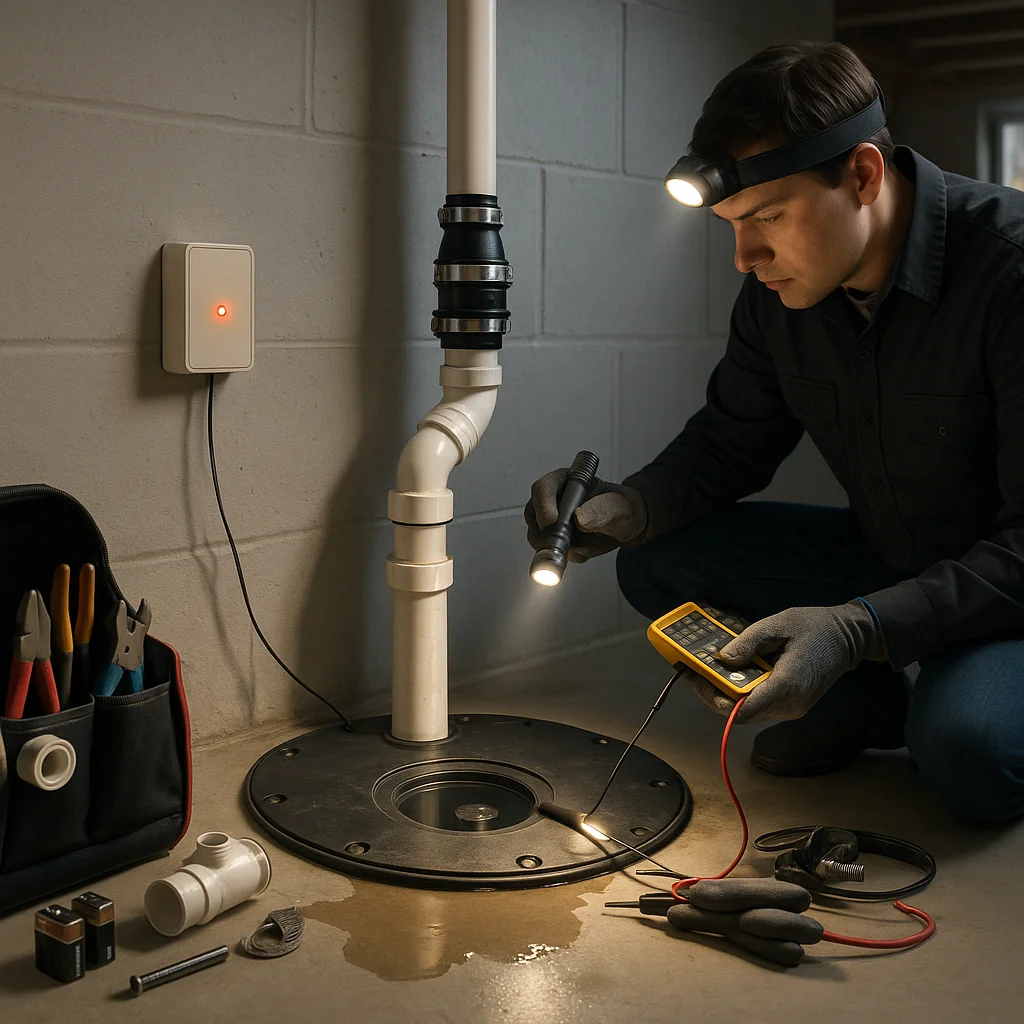
If your sump pump alarm is blaring in your Naperville basement, don’t panic—it’s often a simple fix like a full pit, clogged discharge line, or power issue. Start by unplugging the pump, checking the water level, and clearing debris. For Naperville homes battling heavy spring rains and clay soil saturation, quick action prevents flooding. Follow our step-by-step guide from Naperville Sump Pump Pros for immediate relief and long-term reliability.
Understanding Sump Pump Alarms in Naperville Homes
Sump pump alarms are your basement’s early warning system, designed to alert you when water levels rise too high or the pump fails to operate. In Naperville, where frequent thunderstorms and proximity to the DuPage River lead to groundwater surges, these alarms trigger more often than in drier areas. Common models include battery backup alarms that beep continuously or float switch alarms with red lights. Ignoring them risks water damage costing thousands in repairs.
Local factors amplify the issue: Naperville’s expansive clay soils retain moisture, slowing drainage and overloading sump systems. During events like the 2023 Fox River flooding, many residents faced simultaneous alarms. Understanding your setup—whether submersible sump pump or pedestal—is key to fast resolution.
Common Causes of Sump Pump Alarms
High Water Level Due to Clogged Intake or Pit
The most frequent trigger is a sump pit filled with silt, leaves, or debris blocking the intake screen. In Naperville basements, leaf buildup from nearby trees exacerbates this during fall. Symptoms: Alarm sounds even when pump runs intermittently.
Discharge Line Blockages
Your pump activates but water backs up because the PVC discharge pipe is frozen, crushed, or clogged with sediment. Illinois winters freeze lines exposed outside, common in Naperville subdivisions like White Eagle.
Power Failures or Backup Battery Issues
Primary pump loses power, and the backup battery is dead or sulfated from disuse. Naperville’s grid is reliable, but storms cause outages—test monthly.
Faulty Float Switches or Sensors
Worn floats stick in the ‘up’ position, falsely signaling high water. Vibration from pumps in older Naperville homes (pre-2000 builds) accelerates wear.
Pump Failure from Overuse or Mechanical Breakdown
Motors burn out after prolonged rain seasons. If it’s time for sump pump replacement, alarms persist despite clear lines.
Step-by-Step Troubleshooting Guide
Safety first: Turn off power at the breaker. Wear gloves and have a flashlight. These steps resolve 80% of alarms without tools.
Step 1: Silence and Assess the Alarm
- Unplug the alarm or press the silence button (usually 15-30 minutes temporary mute).
- Check water level in pit—if above pump intake, use a bucket to bail manually.
Step 2: Inspect and Clean the Sump Pit
- Remove pump carefully (submersible: lift by handle; pedestal: unplug and lift).
- Scoop out debris, rinse intake screen. Reinstall ensuring vertical alignment.
- Test: Plug in, pour water to simulate inflow.
For persistent issues in clay-heavy Naperville soil, consider a basement waterproofing consultation to address root causes.
Step 3: Check the Discharge Line
- Trace pipe from pit to exterior—look for kinks, ice, or blockages.
- Flush with garden hose from cleanout (if present) or disconnect and snake.
- Winter tip: Insulate exposed lines with foam sleeves.
Step 4: Test Power and Backup Systems
- Verify outlet with another appliance; reset GFCI if tripped.
- For battery backups, check charge—replace if over 3 years old.
- Simulate outage: Unplug primary, ensure backup activates.
Pedestal sump pump services often include battery diagnostics unique to above-water designs.
Step 5: Examine Float Switch and Pump
- Gently move float—it should glide freely.
- Listen for hum on startup; no hum means capacitor or impeller failure.
- Cycle test 3-5 times with water.
Advanced Diagnostics for Stubborn Alarms
If basics fail, use a multimeter for continuity on switches (under $20 at Home Depot). Check impeller for jams by removing pump cover. In Naperville’s high-water table zones like near the Green Brook, dual-pump systems may need battery load testing.
| Symptom | Possible Cause | Quick Fix |
|---|---|---|
| Continuous beep, low water | Faulty sensor | Replace float ($15-50) |
| Beep with pump running | Clogged discharge | Flush line |
| No power, lights on | GFCI trip | Reset outlet |
| Battery alarm only | Dead backup | Charge/replace |
Naperville-Specific Tips for Sump Pump Reliability
Visit our Naperville service page for local insights. Install check valves to prevent backflow from municipal sewers during storms. Elevate discharge outlets above splash blocks to avoid re-entry. Annual maintenance before monsoon season (June-August) prevents 90% failures. Monitor via smart alarms linked to apps for remote alerts.
DIY limits: If under warranty or complex wiring, call pros. Naperville codes require licensed plumbers for electrical sump work.
Preventive Maintenance Schedule
- Monthly: Visual check, test float.
- Quarterly: Clean pit, test full cycle.
- Annually: Pro inspection by Naperville Sump Pump Pros—call (630) 348-9189 for scheduling.
- Post-storm: Immediate check for silt buildup.
When to Call Professional Sump Pump Repair
DIY resolves simple clogs, but pros handle motor rebuilds, zoning violations, or integration with French drains. Signs: Alarm recurs within hours, unusual noises, or visible pump damage. Expect $150-400 for repairs; faster response in Naperville via local teams.
Naperville Sump Pump Pros offers 24/7 emergency service at (630) 348-9189. We stock parts for major brands like Zoeller and Liberty.
Real Naperville Case Studies
In 2024, a Hobson West home’s alarm stemmed from a crushed line under concrete—fixed with rerouting for $350. Another in Cress Creek: Dead battery during blackout, resolved with AGM upgrade. Lessons: Proactive testing saves floods.
Leave a Reply