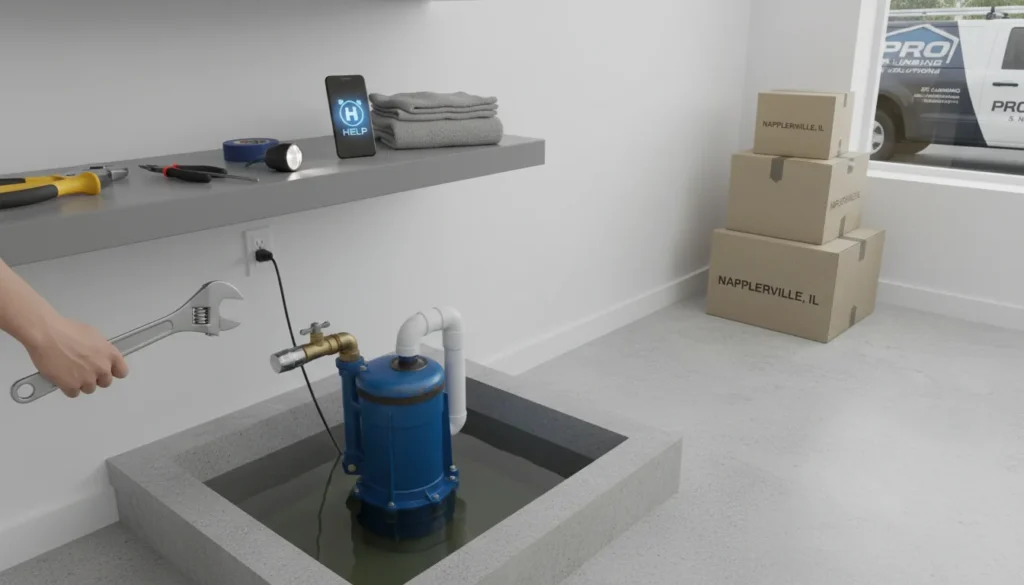
If your sump pump isn’t working in Naperville, IL, don’t panic—heavy spring rains or summer downpours can overwhelm these critical systems, but quick action can prevent basement flooding. Start by checking the power supply and float switch, clean any debris from the pit, and test the pump manually. For persistent issues like a seized motor or faulty check valve, contact local experts like Naperville Sump Pump Pros for reliable sump pump repair Naperville IL services. This guide covers DIY fixes and pro help tailored to our area’s clay soils and frequent storms.
Why Sump Pumps Fail in Naperville Homes
Naperville’s location in the DuPage River watershed means homes face high water tables and intense rainfall, especially during Midwest thunderstorms. Sump pumps work tirelessly to eject groundwater from basement pits, but they can fail due to several common reasons. Power outages from storms are frequent, leaving pumps dormant when needed most. Debris buildup from silt-laden water clogs impellers, while float switches stick from mineral deposits common in local well water.
Mechanical wear is another culprit; submersible models, popular in Naperville basements, endure constant submersion, leading to seal failures after 5-10 years. Pedestal pumps, easier to service, suffer from vibration-induced cracks. Harsh winters freeze discharge lines if not winterized, and our area’s expansive clay soils shift foundations, misaligning pits. Understanding these local factors is key to effective troubleshooting.
Quick DIY Diagnostic Steps
Before diving into repairs, diagnose safely—always unplug the pump first to avoid electrical hazards. Shine a flashlight into the sump pit: is water present but not pumping? Lift the float switch manually; if it doesn’t activate, it’s likely stuck or broken.
- Verify Power: Ensure the outlet works with a tester or another appliance. Check the GFCI if applicable—Naperville codes often require them.
- Inspect the Float Switch: Gently clean with a soft brush. Vertical floats can bind on pit walls; tethered ones tangle in debris.
- Test the Impeller: Feel for free spin by hand (unplugged!). Grinding suggests debris or bearing failure.
- Check the Check Valve: Located on the discharge pipe, it prevents backflow. Squeeze the rubber flap; replace if brittle.
These steps resolve 40-50% of issues without tools, per industry stats, saving Naperville homeowners from immediate water damage.
Effective DIY Fixes for Common Problems
Once diagnosed, many fixes are straightforward with basic tools. For power issues, reset breakers or replace a tripped GFCI. Clean the pit using a shop vac—remove sludge carefully to avoid pump damage. If the float switch is faulty, replacement costs $20-50 and takes 15 minutes: unplug, unscrew, install new (match type: vertical for shallow pits, tethered for deeper).
De-clog the impeller by removing the pump (two people recommended for submersibles) and flushing with a garden hose. For discharge clogs, snake the PVC pipe from outside. Install a battery backup if absent—essential in storm-prone Naperville. Lubricate pedestal pump motors sparingly with manufacturer-approved oil to reduce friction.
Pro Tip: Document your sump pit depth and pump model for future reference. Naperville’s building codes require pits at least 24″ deep, so measure accordingly.
| Problem | DIY Fix | Time Required | Cost Estimate |
|---|---|---|---|
| Stuck Float | Clean or replace | 10-20 min | $0-50 |
| Debris Clog | Vacuum and flush | 30 min | $0 |
| Check Valve Fail | Replace valve | 15 min | $15-30 |
| No Power | Check GFCI/breaker | 5 min | $0 |
These interventions extend pump life, but safety first—avoid if uncomfortable with water/electricity.
Advanced Issues Requiring Caution
Seized motors or leaking housings signal end-of-life. Submersible sump pumps, buried deep, demand professional extraction to avoid voiding warranties. In Submersible Sump Pump Repair, pros use specialized pumps to drain pits safely. Electrical faults like shorted capacitors require multimeter testing—not DIY territory. Backflow from municipal sewers during heavy rains (common post-2023 floods) needs testable valves per Naperville ordinances.
When to Call Pros for Sump Pump Repair in Naperville IL
DIY shines for minor issues, but pros handle complexity. Signs include burning smells, constant humming without pumping, or water overflowing despite checks. Naperville Sump Pump Pros specializes in rapid response, diagnosing with pressure tests and camera inspections. They service Pedestal Sump Pump Services efficiently above the waterline.
Local expertise matters: our team’s familiar with DuPage County permits and handles dual-pump systems for high-water-table homes. Expect same-day service during storms, with warranties on parts/labor.
Naperville-Specific Insights and Prevention
Our flat terrain and proximity to the DuPage River amplify groundwater risks. Clay soils retain moisture, slowing drainage—pair sump pumps with French drains. Monitor via apps from smart pumps. Winterize by insulating pipes; spring checks post-thaw prevent failures.
For nearby areas like Oswego, similar challenges apply. Visit our Naperville service page for tailored advice. Annual maintenance—cleaning, testing—cuts failure rates by 70%.
- Schedule bi-annual inspections.
- Install alarms for early alerts.
- Upgrade to high-head pumps for deep basements.
- Consider redundant systems.
Investing upfront averts $5,000+ flood claims, per insurance data.
Long-Term Maintenance for Reliability
Beyond fixes, prevention rules. Test monthly: fill pit with hose, observe cycle. Clean quarterly, replace check valves yearly. For pedestal units, check bearings; submersibles, monitor amp draw. Naperville’s humid summers foster algae—use enzyme cleaners. Track runtime logs to predict wear. Pair with dehumidifiers to reduce moisture loads. These habits ensure decade-long performance, safeguarding your investment.
Leave a Reply