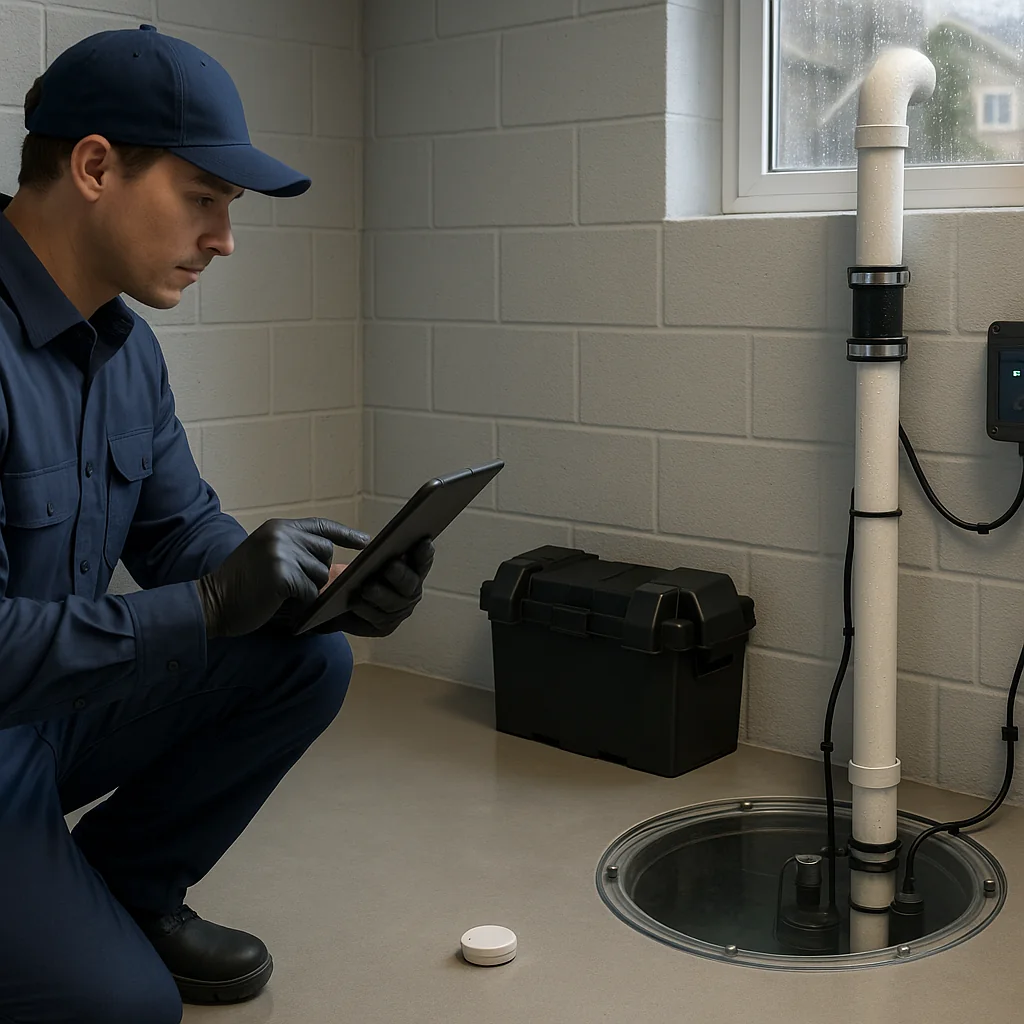
In Naperville, where heavy spring rains and summer storms frequently cause power outages, installing a battery backup sump pump is the most reliable way to prevent basement flooding. These systems automatically switch to battery power when the grid fails, keeping water out of your home and protecting your property from costly water damage. At Naperville Sump Pump Pros, we specialize in sump pump repair Naperville IL, and recommend battery backups as essential for homeowners in this flood-prone area.
Understanding Basement Flooding Risks in Naperville
Naperville’s location in the DuPage River watershed exposes homes to significant flooding risks. Intense rainfall, often exceeding 2 inches per hour during thunderstorms, overwhelms standard drainage systems. Power outages, common during these events due to Illinois’ severe weather patterns, disable primary sump pumps, leading to rapid basement inundation. According to local records, Naperville experiences over 40 inches of annual precipitation, with peaks in spring and fall that coincide with grid instability.
Basement flooding isn’t just an inconvenience—it’s destructive. Water damages drywall, insulation, flooring, and stored belongings, often costing thousands in repairs. Mold growth follows within 48 hours, posing health risks. In nearby areas like Oswego and Romeoville, similar topography amplifies these issues, making proactive measures vital across the region.
What Are Battery Backup Sump Pumps?
A battery backup sump pump consists of a primary AC-powered pump paired with a secondary DC pump powered by a rechargeable battery. When electricity fails, the system detects the outage and seamlessly activates the backup within seconds. Modern units feature alarms for low battery or high water levels, smart chargers that maintain battery health, and runtime capacities of 7-10 hours or more under load.
Key components include:
- Primary pump: Handles normal operation.
- Battery: Typically 12V deep-cycle, lasting 3-5 years.
- Controller: Monitors power and water levels, switches automatically.
- Alarm: Audible and visual alerts for issues.
Unlike pedestal models, which are suitable for certain installations but less robust in high-water scenarios, battery backups integrate with submersible or pedestal setups for comprehensive protection. Learn more about pedestal sump pump services for compatibility options.
Why Battery Backup Sump Pumps Are Essential for Naperville Homes
Naperville’s microclimate, influenced by Lake Michigan, brings frequent high-wind storms that knock out power for hours. A standard sump pump fails immediately without electricity, but a battery backup ensures continuous operation. Statistics from ComEd show over 100 major outages annually in DuPage County, directly correlating with flood claims.
Benefits include:
- Power outage protection: Critical during blackouts lasting up to 12 hours.
- Extended runtime: Pumps 2,000-3,000 gallons per hour on battery.
- Peace of mind: No manual intervention needed.
- Property value preservation: Prevents structural damage that reduces home resale value by 10-20%.
- Insurance savings: Many policies offer discounts for backups.
Compared to generators, battery systems are quieter, cheaper to install (around $1,200-$2,500), and require no fuel storage.
How Battery Backup Sump Pumps Work
The system operates on a dual-pump principle. The primary pump activates via a float switch when water reaches a set level in the sump basin. If power cuts out, the controller senses voltage drop and powers the DC backup pump from the battery. Post-outage, it recharges automatically.
Advanced features in top models:
| Feature | Description |
|---|---|
| Smart Monitoring | Wi-Fi apps alert your phone to issues. |
| High Water Alarm | Triggers if backup fails or basin overflows. |
| Auto-Vent | Releases hydrogen gas from batteries safely. |
For preventing overflows entirely, consider complementary solutions like sump pump overflow prevention strategies.
Signs Your Naperville Home Needs a Battery Backup Sump Pump
Watch for these indicators:
- Frequent power flickers during storms.
- History of basement dampness after rain.
- Sump pump running constantly without backup.
- Age of current system over 7 years.
- Location in low-lying Naperville neighborhoods like the Naperville flood zones.
Conduct a sump pump check: Fill the basin manually and time activation. If delay exceeds 10 seconds or no backup engages, upgrade immediately.
Installing Battery Backup Sump Pumps in Naperville
DIY is possible for handy homeowners, but professional installation by experts like Naperville Sump Pump Pros ensures code compliance and optimal performance. Steps include:
- Site assessment: Check basin size (18-24″ diameter ideal), discharge lines.
- Mount controller: 3-5 feet above floor, near GFCI outlet.
- Connect battery: Use AGM type for maintenance-free operation.
- Test system: Simulate outage and high water.
- Integrate check valves: Prevent backflow.
Local permits may be required for electrical work. Expect 2-4 hours for install.
Maintenance Tips for Longevity
Monthly checks extend life to 10+ years:
- Clean debris from pit weekly during wet seasons.
- Test battery monthly by unplugging primary power.
- Replace battery every 3 years or per indicator light.
- Inspect hoses for clogs; flush with vinegar solution.
- Winterize: Ensure pit doesn’t freeze; use heat tape if needed.
Schedule annual professional servicing to catch issues early.
Local Insights: Naperville-Specific Considerations
In Naperville, clay-heavy soils slow drainage, increasing sump reliance. HOA rules in developments like White Eagle may mandate backups. Recent floods in 2023 highlighted vulnerabilities, with over 200 claims filed. Nearby Romeoville saw similar devastation, underscoring regional needs.
Choose pumps rated for Illinois’ humidity; brands like Zoeller and Liberty excel here.
Cost vs. Savings Analysis
Initial cost: $1,200-$3,000 installed. Savings: Avoid $5,000-$50,000 flood repairs. ROI in 1-2 years for at-risk homes. Federal tax credits may apply for energy-efficient models.
Table of popular models:
| Model | Runtime (Full Load) | Price |
|---|---|---|
| Zoeller Aquanot | 10 hours | $1,800 |
| Liberty Pumps | 8 hours | $1,500 |
| Basement Watchdog | 12 hours | $2,200 |
Common Myths Debunked
Myth: Generators suffice. Reality: They require startup time and fuel.
Myth: All batteries are equal. Reality: Use marine deep-cycle only.
Armed with this knowledge, Naperville homeowners can fortify against floods effectively.
Leave a Reply